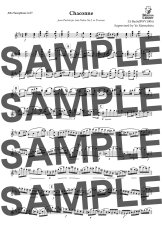
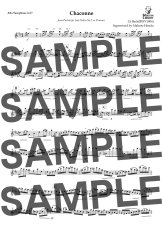

The chaconne is one of the triple time dances that originated in Spain and is characterized by the important beat coming on the second beat. Among these, Bach's chaconne is particularly well known and has been interpreted and performed by many performers.
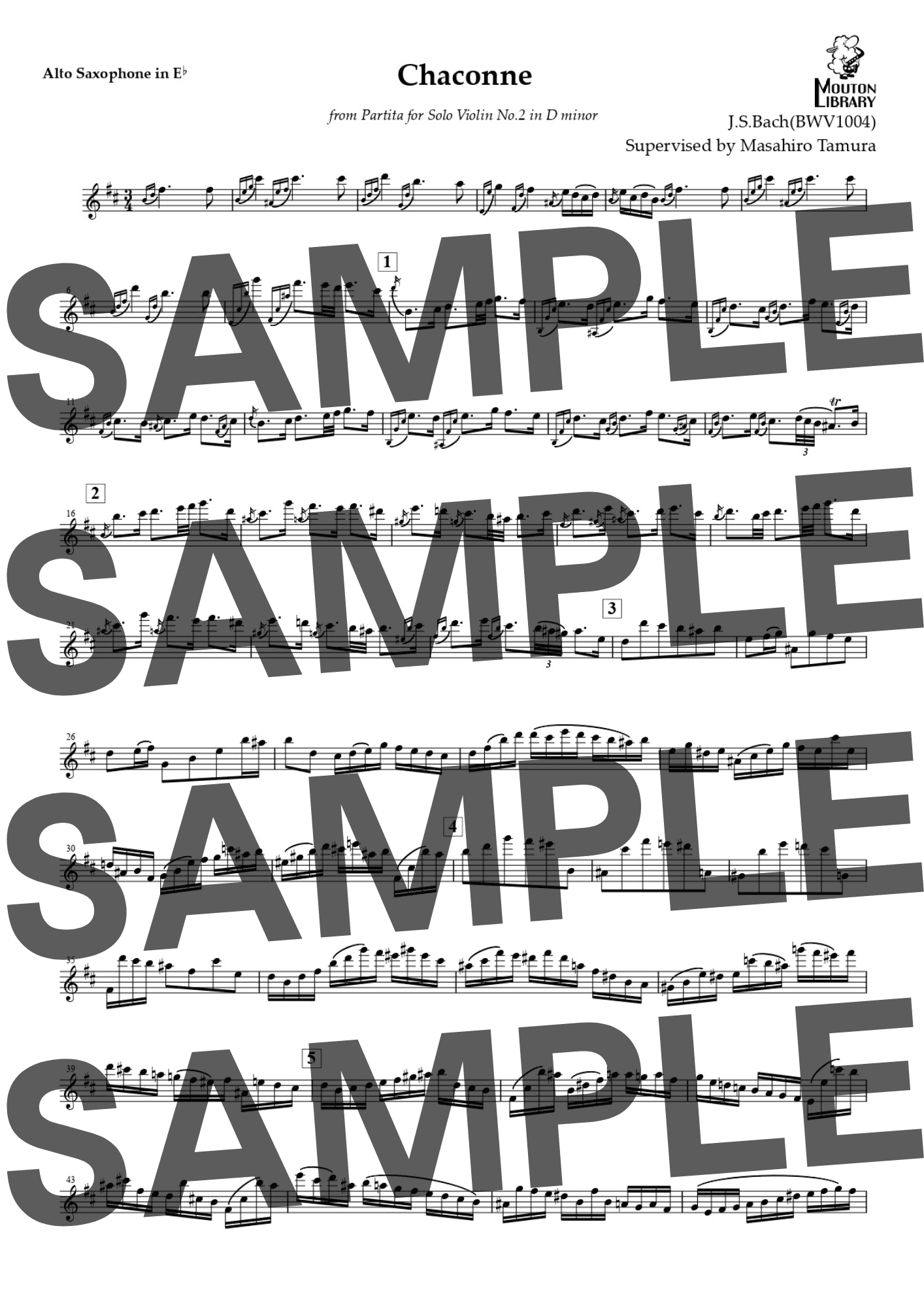
This piece is the fifth piece of Partita for Solo Violin No.2 in D minor (BWV1004) and the climax of the entire piece. Even the original violin requires superb technique, and the cadenza demands originality.
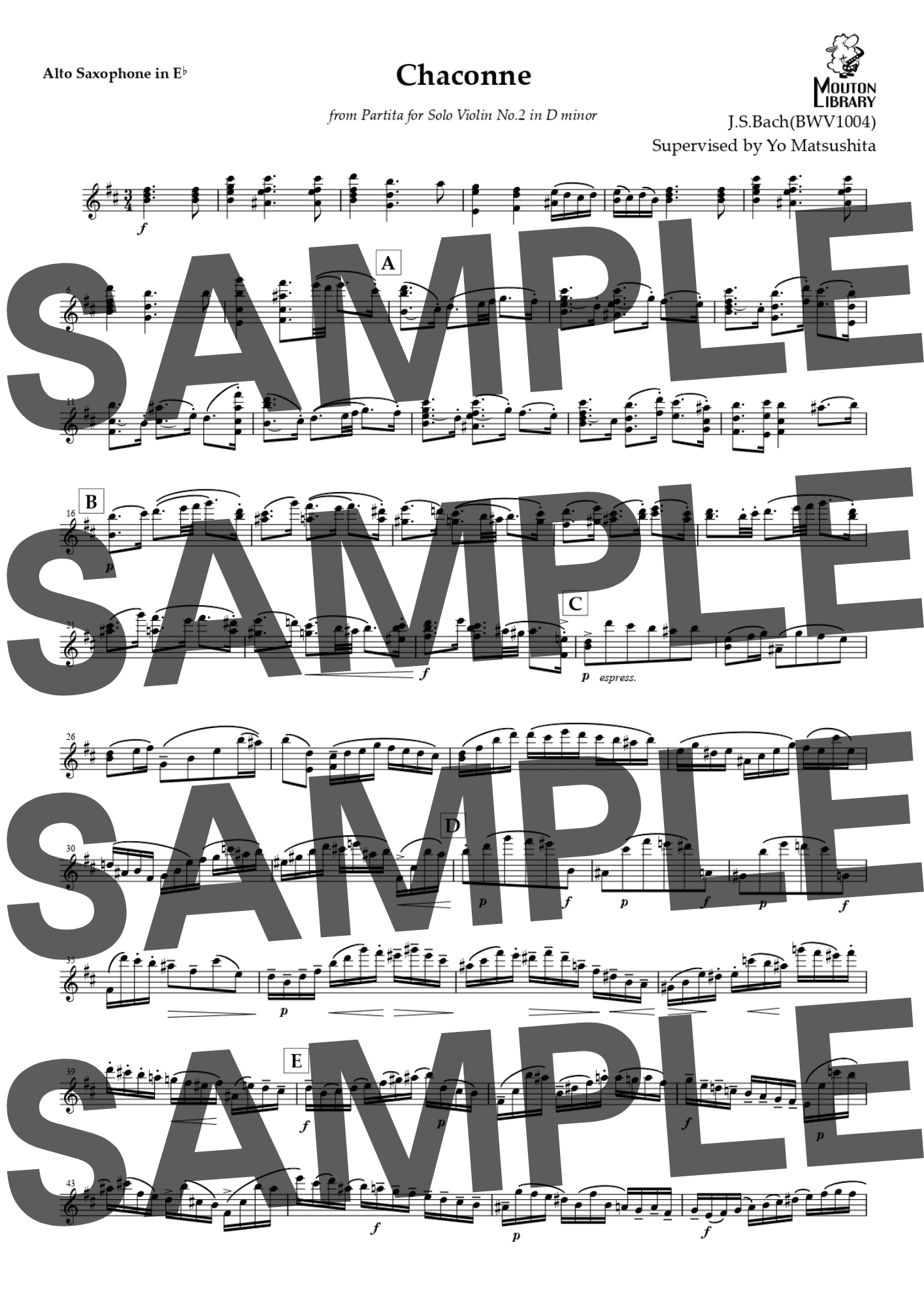
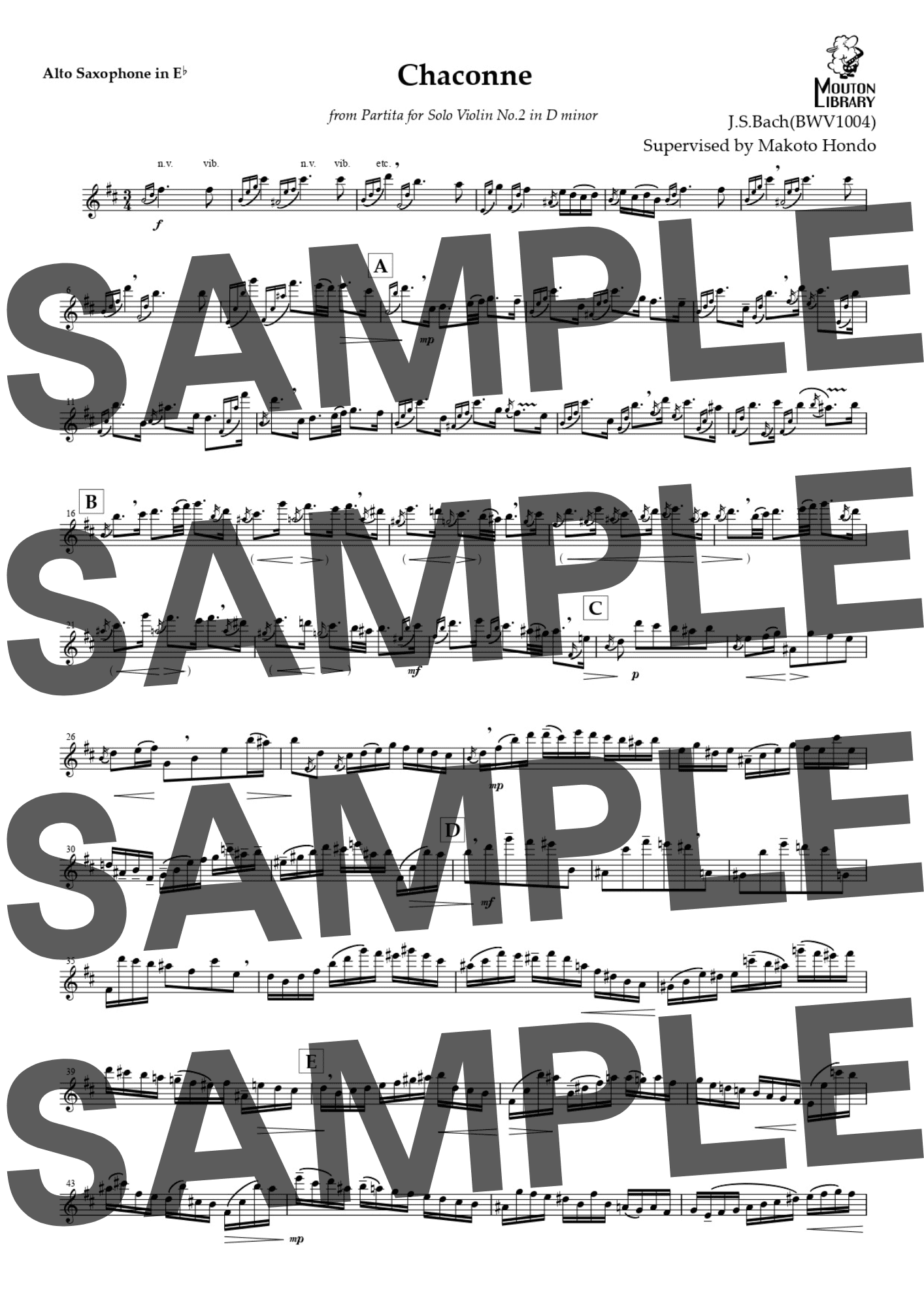
In this score, three of the leading players in the world of Japanese saxophone have made gorgeous arrangements. (3 variations by each player)
One thing I try to keep in mind when performing an arrangement is how to “assume the saxophone,” both in the score and in the performance. It is a time for me to check my technique, and it is also a time for me to communicate with the composer. I ask myself, “Mr. Bach, how would you cook with this saxophone instrument? This one is a bit difficult, but isn't this one beautiful? I enter the other world and discuss with the composer through the score.
For example, Bach's Partita in A minor for Flute(BWV 1013), Marais's Les Folies d' Espagne, or Bonaud's Caprice En Forme De Valse, I would imagine the writing style of many unaccompanied wind works and translate them for saxophone.
I hope that the skills you have at the time will allow you to take in these beautiful melodies and harmonies as a pure part of your daily life, and that the pleasure of confronting this sublime work will enrich your life.
■Arrangement Details 2(explanation:Yo Matsushita)
When working on this piece, I had the idea of performing it as a duo with piano in the future, so I used the violin and piano score by Robert Schumann, whom I just love, almost as is for saxophone. The solo sound is almost the same as the original version, but the articulation has a strong character, and together with the interesting sense of harmony given by Schumann, it will give you quite a few novel ideas.
Now, I think it really takes a lot of time and knowledge to get close to Bach, who usually uses too detached a sense. Therefore, I think it is an eternal challenge, full of fascination that never runs out of flavor, and if you are trying to grasp something, it may be quite difficult to unravel the vast number of pieces that he continued to dedicate to God.
However, is especially full of Bach's very human side, with the strength of a man who is slowly treading the long road (some say it is like a journey) with all his might until he completes a piece, and with the heaviness and melancholy of a man who may not want to see the end of a piece. It is written. The beauty of this gesture of accepting everything that has happened and finishing the last note as a milestone is one of the most beautiful of all human activities, and makes us feel happy that we are human.
For me, it doesn't really matter if I can play it well or not. I wanted to walk the path that many performers who love this music must have followed in the past, more than tens of thousands, I think. I wanted to lay out all the notes in the score without omitting any of them as much as possible. Some scenes might be awkward on the saxophone instrument, and some expressions might be fresh. But since it was a rare opportunity, I wanted to touch Bach as close as possible and enjoy the emotions that our great predecessors had captured, so I played without adjusting to the saxophone.
I hope you will always remember that you are playing multiple voices at the same time, and I hope you will fully enjoy Bach's humanity and the respect that Schumann paid to him.
■Arrangement Details 3(explanation:Makoto Hondo)
This arrangement is a form that respects the original song as much as possible in my own way. I am trying to incorporate both the challenges of what can only be done on the violin and what the saxophone is good at.
I hope that those who work on this piece will listen to the original violin version and then discover what parts of the piece the player values as the core of the piece. What I feel now could very well change in 5 or 10 years, and I hope that people will experience the fun of creating their own unique chaconne without being limited by the ideas of a single score.